Dec 19, 2018

SOx and NOx emissions reductions from coal fired electric power generation

SOx and NOx emissions

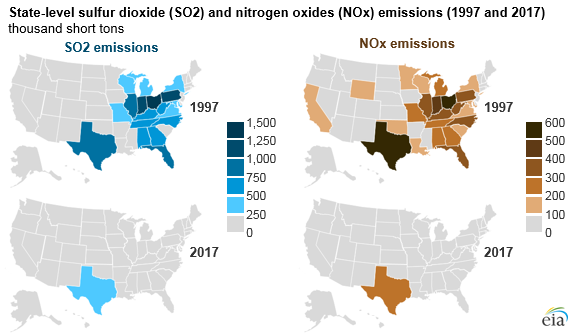
Coal accounted for more than 50% of U.S. electricity generation in 1997, and natural gas and renewables together accounted for 26% of generation. By 2017, coal-fired generation had declined to 30% of electricity generation while generation from natural gas and renewables grew to nearly 50% of electric power industry generation.
SOx and NOx emissions reduction from 1997 to 2017
Source and complete discussion at : https://www.eia.gov/todayinenergy/detail.php?id=37752

Read More...

Apr 5, 2017

Human Robot Interaction (Cute)

Well, this assumes that the human thinks that interaction is with a robot.

Not sure what the robot thought, it remained silent this time around.  JK.


Saw this on twitter originally! https://twitter.com/bentolmachoff/status/846476110846017536

Read More...

Dec 25, 2015

Local offgrid enthusiasts

I got a chance to visit a friend here in central PA who is setting up his property to be self sufficient on both energy and water needs.

 A quick photo log follows of some of the efforts at two locations.

Caption is above image.
Solar photovoltaic system (rooftop) and a solar thermal water heating system on the side of the barn wall.

PV system is 7kW and about 6-8 hours average sunlight in a day with peak between 11-3pm

Direct solar thermal water heater (in detail)
Water flows through a loop changing direction at the ends, this keeps it long in sunlight to heat up sufficiently. Higher absorbent coatings or color on the pipes help further.

Micro hydro potential.
While the drop is relatively small, it is possible to build a penstock system that takes water through a steeper drop to the side and after the turbine can be released back into the stream.

He also has electric cars and batteries hooked up to the PV system. Further, he has a van with solar panels installed in top for road auxiliary power as well as power for lights, electric stove etc when they park/camp.

He also has 2 diesel cars that run on used vegetable oil! That's waste oil being used as a fuel! The house heating is supplemented by local wood furnaces. A lot of dead trees can be used as firewood (at least in PA), he also used wood pellets, that burn cleaner and completely.


All in all it was a great visit!

Read More...

Dec 21, 2015

Workshop on Power Systems and Markets - Penn State Nov 2015

Workshop on Power Systems and Markets 2015


Penn State [1], a leading research university recently launched the Center for Sustainable Electric Power Systems (CSEPS). This is "an interdisciplinary research initiative with focus on renewable power systems and markets."


CSEPS, led by Profs Mort Webster and Uday Shanbagh recently conducted a two day workshop on Power systems and markets (Nov 19,20 - 2015). I signed up for the workshop and attended several sessions on both days and learnt a lot of new things about power markets and also connected several dots inside my head between economic development, pricing power, strategy and island/remote area electricity supply.

Key Takeaways from CSEP workshop at Penn State:
1) Illinois Institute of Technology has built a full scale technology demonstration microgrid that powers their campus, saves peak power and has a simple payback period of about ~5 years. The project cost was $12 M but the DOE grant reduced the direct costs for IIT. 

Also, at UCSD, a 42 MW microgrid is operational and paving the way for the future.
At UCSD, the microgrid provides the ability to manage 42 megawatts of generating capacity, including a central cogeneration plant, an array of solar photovoltaic installations and a fuel cell that operates on natural gas reclaimed from a landfill site.  (link)

2. Dr. Paul Sotkiewicz (PJM) argued that heat rate improvements have caused lower CO2/MMWh. If my notes are correct, the numbers quoted were a total CO2 emission reduction of 115 million tonnes.

Some other interesting info bytes:
In this post, I will review some of the notes I gathered from two of the plenary sessions and some thoughts regarding applications into specific markets. The format will be introduction to speaker and topic, specific points from lecture, Q&A and Summary thoughts.


Technology and Policy Impacts on Electricity Markets

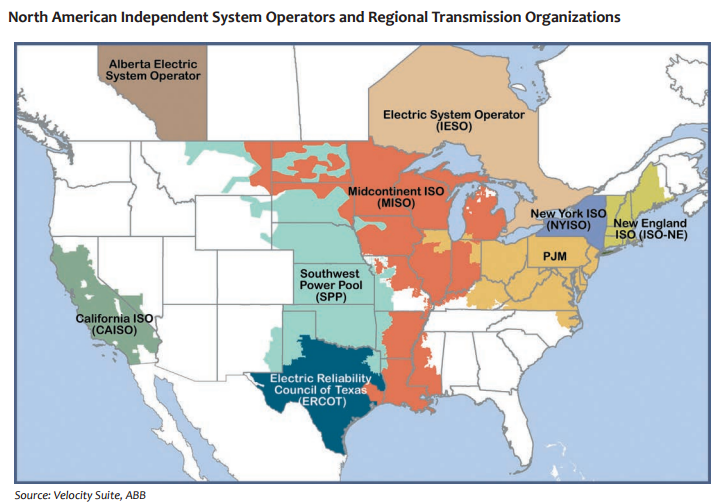
The opening plenary speaker was Dr. Paul Sotkiewicz, Senior Economic Policy Advisor at PJM Interconnection. He immediately won the attention of the audience (at least mine, for sure) with his dry wit and knowledge.  He has worked at the Federal Energy Regulatory Commissions and the University of Minnesota, and University of Florida, prior to PJM, so we got a treat listening to a very experienced professional with insights from academic, public and private perspectives. Before I say more about his lecture, it is important to stress on the scale of operations at PJM (an entity that covers 13 states now, although PJM originally used to be Pennsylvania Jersey Maryland).


Peak   - 165, 492 MW
Capacity - 183, 604 MW
2014 GWh - 837, 796
Population - 61 million


For comparison US total generation is nearly 4 million GWh:

Q & A:

One of the questions raised was if the electricity data includes any of the distributed generation from small scale solar and other renewable electric. The speaker mentioned that this is some data that they do not always have access. Update: A recent EIA news report seems to indicate that this data may be available soon.


Small-scale distributed solar photovoltaic (PV) systems, such as those found on residential and commercial rooftops, have grown significantly in the United States over the past several years. Starting this month, the U.S. Energy Information Administration (EIA) is including monthly estimates of small-scale distributed solar PV capacity and generation by state and sector in EIA's Electric Power Monthly.”

EIA estimates that total U.S. solar generation (PV and thermal) was 3.6 million megawatthours in September 2015, with 33% of that total coming from small-scale solar PV. Overall, U.S. solar generation, including both small-scale distributed PV and utility-scale PV and thermal solar generation, was equivalent to about 1.0% of total reported electricity generation from all utility-scale sources in September 2015.  

IIT MICROGRID - http://iitmicrogrid.net/
tags: natural gas, constrained, variable energy scheduling

Prof. Mohammed Shahidehpour


DC nanogrid running direct loads (computers and modified LEDs in gyms) help in cutting down costs of inverters/hardware. In effect they can reduce total loads by up to 56% and the test case showed that gymnasiums were able to reduce costs by about 50% (Presentation).


Cost of power on islands is typically about 50-55 cents/kWh. These costs can be brought down to about 30 cents/kWh by the use of microgrids.


[1]: The Pennsylvania State University, a large land-grant reseach institution in the Commonwealth of Pennsylvania, is located at State College PA and several other branch campuses through Pennsylvania and also has satellite locations in San Diego and collaborations with several institutions around the world. Note: I hold a Masters degree from Penn State Mechanical Engineering and am (/was) a PhD candidate in Energy and Mineral Engineering.


[2]:  Funded by the Earth and Mineral Sciences Energy Institute, the Center for Sustainable Electric Power Systems (CSEPS) brings together university faculty from a variety of disciplines—including engineering, economics, earth sciences and agricultural sciences—to develop innovative research projects that are centered on sustainable electric power.


Other Relevant Data:


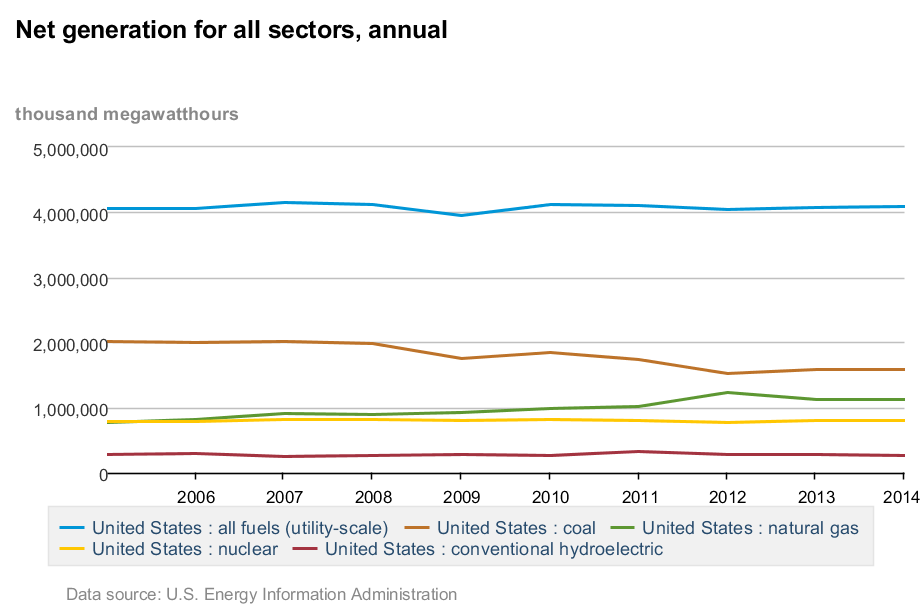
Net_generation_for_all_sectors%2C_annual.png


Read More...

Dec 17, 2015

The Economics of Battery Energy Storage -via RMI

Sharing The Economics of Battery Storage via Rocky Mountain Institute (External Link)


The Economics of Battery Energy Storage

Read More...

Dec 8, 2015

Interactive Population Map - Business Data

2 sec response

Business Data Tools : http://www.census.gov/data/data-tools/cbb.html

3 min read +  2 min video:


In graduate school, one of the things I learned about giving presentations was to "know your audience". This is very relevant to know as you can adjust your story and the presentation style to match the needs of high school students or undergraduate sophomores or a room full of post docs | professors | subject matter experts.


I learned to apply the same principle when it came to selling products or services. Know your audience, translates to "know your customers, potential customers". Where students and scholars look for knowledge alone, customers might look for knowledge and a product, or just the product, or just the knowledge alone.

In any case, it is crucial for you to know who your market segment is and how they are spread out through geographical or other territory. A great way to find a lot of such information is through maps. If I wanted to look at age groups, then I look at US Census data.

Below, I picked five major metro areas (Pennsylvania as it is a home state and other just out of certain trade considerations for a product under development. Here's a comparison of five states from US Census Bureau.

Clicking the different tabs on the map yields the comparison data for different parameters. It is interactive, go ahead and check it out.


Make your own map at http://www.census.gov/2010census/popmap/

Read More...

Oct 20, 2015

BioSolar Announces Major Battery Advancement

"By integrating our high capacity, high power and low-cost cathode with conventional anodes, battery manufacturers can create a super lithium-ion battery that can double the range of a Tesla, power an iPhone for 2 days straight, or store daytime solar energy for nighttime use."

The inventors of the jointly owned patent application include Dr. Alan Heeger (Nobel Prize winner 2000) and Dr. David Vonlanthen of UCSB, and Dr. David Lee, the Company’s chief executive officer and Dr. Stanley Levy, the Company’s chief technology officer.


From the Press Release
BioSolar is developing a breakthrough technology to double the storage capacity, lower the cost and extend the life of lithium-ion batteries. A battery contains two major parts, a cathode and an anode, that function together as the positive and negative sides. Today's state-of-the-art lithium-ion battery is limited by the storage capacity of its cathode, while the anode can store much more. Inspired by nature, we are developing a novel cathode based on inexpensive conductive polymers and organic materials that can fully utilize the storage capacity of conventional anodes. By integrating our high capacity, high power and low-cost cathode with conventional anodes, battery manufacturers can create a super lithium-ion battery that can double the range of a Tesla, power an iPhone for 2 days straight, or store daytime solar energy for nighttime use. Founded with the vision of developing breakthrough energy technologies, BioSolar's previous successes include the world's first UL approved bio-based back sheet for use in solar panels. 

This post was originally published on Tansa Tech's blog.

Read More...

Sep 16, 2014

Ransler and Sinha: Husk Power

A cool little video on  rice husk based systems and a company that is providing microgrid solutions along with local employment opportunities in rural India.


2008 PopTech Fellows Chip Ransler and Manoj Sinha present the achievements and plans of  Husk Power Systems (HPS), a for-profit company that’s created a proprietary technology to cost-effectively convert rice husks into electricity. HPS delivers electricity – and dramatically improved lives – to India’s “Rice Belt.”


Ransler and Sinha: Husk Power

Read More...

Jun 13, 2014

Tesla Motors Open up Patent Portfolio

In a somewhat altruistic move and a clear move to promote more innovation in the electric car segment, Tesla Motors (NYSE: TSLA) announced that their patents are now available for anyone to use.

http://www.teslamotors.com/blog/all-our-patent-are-belong-you

Tesla Motors was created to accelerate the advent of sustainable transport. If we clear a path to the creation of compelling electric vehicles, but then lay intellectual property landmines behind us to inhibit others, we are acting in a manner contrary to that goal. Tesla will not initiate patent lawsuits against anyone who, in good faith, wants to use our technology.
Musk goes on to say and take a dig (rightfully so) at the (solely) materially minded folks in the legal profession:
 I thought patents were a good thing and worked hard to obtain them. And maybe they were good long ago, but too often these days they serve merely to stifle progress, entrench the positions of giant corporations and enrich those in the legal profession, rather than the actual inventors.
and
Given that annual new vehicle production is approaching 100 million per year and the global fleet is approximately 2 billion cars, it is impossible for Tesla to build electric cars fast enough to address the carbon crisis. By the same token, it means the market is enormous. Our true competition is not the small trickle of non-Tesla electric cars being produced, but rather the enormous flood of gasoline cars pouring out of the world’s factories every day. 
A great way to locate these specific Tesla patents is to use the google search:

https://www.google.com/search?tbo=p&tbm=pts&hl=en&q=inassignee:%22Tesla+Motors,+Inc.%22

(hat tip: negativo17@gmail.com )

Good luck to Tesla Motors and also to highly efficiency electric cars!

Read More...

Apr 24, 2014

Efficient Urban Mass Transit


Bogota, Colombia has one highly efficiency and urban mass rapid transit systems, at very low costs. 
Read more about how this city of about 8 million people (comparable to New York city USA)

Key facts: 
  • Buses have a dedicated lane through the major roadways in the city (usually placed in the center/median of the roadway with access ramps and overpasses to connect pedestrians to the median). "troncal" is the term.
  • Bus stations have platforms that line up with the bus threshold for easy access to all passengers including those on wheelchairs.
  • Up to 1400 main buses (long buses - people pay a fare with card) and over 400 feeder buses (that run free) that connect to the main lines.
  • Will add financial info soon, so far all the budget data we looked at are in spanish so we are working on translations.

One other cool thing to note (in a traditionally male dominated field like transportation engineering: their current CEO is a female.

Sources
  1. Street Films Vlog on Youtube: https://www.youtube.com/user/StreetfilmsVlog
  2. Transmilenio Authority http://transmilenio.gov.co/
  3. http://transmilenio.gov.co/en
  4. Transmilenio's Youtube channel: https://youtube.com/user/OFICIALTRANSMILENIO
  5. Transmilenio on Twitter: https://twitter.com/TransMilenio
  6. https://en.wikipedia.org/wiki/TransMilenio

Read More...

Mar 31, 2014

the Need to Develop a Framework towards Sustainable Use of Forestry Biomass

Biomass is normally considered a "renewable and carbon neutral energy source" but unless the biomass is harvested in a sustainable manner with long term plans to regenerate those plants and trees, it would not remain a truly renewable and carbon neutral source. Here, we discuss some brief ideas on how to develop a basic framework for sustainable harvest of forestry biomass. 
The world (or at least the primary energy producers) need to focus on energy needs by region, biomass resource availability by type (crop residues, forest residue, methane (landfills/manure management, wastewater), urban wood residues and mill residues, and a discussion on the matching capabilities of these resources by economic extraction value. For the US and N. American regions, the National Renewable Energy Laboratory in Golden CO has some excellent interactive mapping tools available online [1].
Map of Forestry Residues (Contiguous lower 48 USA); Query source: NREL
A detailed thermodynamic analysis of the use with existing technologies should be estimated for a foreseeable short period of about five years. Beyond five years, we should develop synergistic technologies that can take advantage of cyclical solar energy to produce viable biobased fuel products in various biorefineries as well as biomass combustion units. The stakeholders involved in this could be the entities that own the forests (government units such as Dept of Environment/Forests, timber mills, businesses with leases on biomass use for energy), indigenous people/society that is dependent on forest for livelihood etc. In certain regions, the use of forest biomass should take the societal aspect also into consideration [2].
The efficient use of these forest residues and projections over next twenty years could have a significant impact on the ecological, economic and societal aspects for a large portion of our growing population. The balance between agricultural expansion into forest land, forest thinning practices and timber management’s impact on woody fuel production are all significant issues that need to be addressed by several states and also need to be addressed by consortia of multiple states in some cases. 
There is a pressing need for a real framework to be developed for carbon emissions measurement, the reach of regulatory bodies (existing and necessary new rules) and a quantification of the sustainability of forest use through an accounting and documenation procedure. Specific quantitative rules that assess the balance between use of woody biomass from forests in thermochemical processes versus other opportunistic fuel use should be discussed based on regional constraints. A thermodynamic analysis juxtaposed with heat rate needs for populations in the forestry’s harvest region would be one determining factor for the rate of forest thinning. A detailed look at the existing framework of rules for certifying the sustainability of forestry biomass use should not just be carbon centric but should also be water centric [3]. 
References
1. NREL. 2014; Available from: http://maps.nrel.gov/biopower.
2. Myllyviita, T., et al., Sustainability assessment of wood-based bioenergy – A methodological framework and a case-study. Biomass and Bioenergy, 2013. 59(0): p. 293-299.
3. WWF. Position Paper on Sustainability Criter for Forest Based Biomass in Europe used in Electricity, Heating and Cooling. 2012; Available from: http://awsassets.panda.org/downloads/forest_based_biomass_position_paper_finale.pdf.

Read More...

Mar 27, 2014

Fusion Energy Developments: for Space travel


It may not be the most efficient way of producing propulsion or power for consumption on earth, but for travel in the space/reducing travel time etc, fusion could be one of the best bets. 


So much so, that NASA has given two rounds of funding to a joint team of scientists from U Wash and  MSNW for a fusion based rocket project. Most of the big details of Slough et al's work is discussed in the paper (below) and Technews's article (link below).


One set of three rings weighing about 350 gm will be used for each implosion, Slough said. The pressure inside the rings will reach 600,000 atmospheres for a few microseconds, vaporizing the rings. The resulting superheated ionized metal will be ejected out of a divergent magnetic nozzle at high velocity. (link)

What I am really hoping is that this Lithium based fusion plasma reactor could spawn the development of a economical and safe fusion reactors for civilian power on earth.

This project has been partly funded by the NASA Institute of Advanced Concepts Review.


Sources: The Fusion Driven Rocket: Nuclear Propulsion through Direct Conversion of Fusion Energy    Slough et al. 2013 (PDF paper)

Read More...

May 20, 2013

Energy Topics - Weekend Reading


UPDATED READING LIST

Instead of reading articles as soon as I see them, I am going to collect a few links here and hold on. Then, after review, I can write comments or analysis on them.

Friday's Reading List

Offshore Secret Files Expose Offshores Global Impact

How Volatility Boosts Career Resilience

US Offshore Wind: Still a Ways to go

Also look into:


Read More...

Oct 28, 2012

Retail CNG Trucks - Chrysler RAM


Just read this news that Chrysler has offered CNG trucks to dealerships that can sell it to retail customers in 19 states starting soon..
More on this is covered here:


Read More...

Sep 13, 2012

October-November Energy Conferences


Here are few of the upcoming conferences in the Pittsburgh Area where Energy would be a focus:

Pittsburgh Coal Conference
Oct 15-18, 2012;

American Institute of Chemical Engineers
Oct 28- Nov 2, 2012;

Unconventional gas
Nov 13-15, 2012;
DUG East 2012: http://www.dugeast.com/?goback=%2Egde_1687797_member_177722416


Read More...

Aug 17, 2012

Urban Transportation: Tata Motors Pod

A pod shaped vehicle meant for urban transport on small distance scales is under the works at Tata Motors.

More about it: http://www.designboom.com/weblog/cat/16/view/23041/tata-motors-airpod-air-powered-urban-commuter-vehicle.html


Read More...

Jun 18, 2012

Newspaper Record of PA Anthracite Mining Found in 1902 Aussie Newspaper

user corrected images and old text archives, newspapers, mags etc
Australian National Library - home page screenshot
I was looking for some information on Anthracite coals mined in Pennsylvania and conducted a preliminary internet search on mine locations. One result that showed up was very unique indeed, in that, it spoke about a mine (Mammoth) that has been closed for a while (and since reopened for possible coal-to-liquids projects). What struck me about this web-hit was that it was from a 1902 newspaper clipping archived in the National Library (Australia)'s site.

I did my bit in correcting the first two paragraphs of that particular newspaper article and would probably go back to correct more in the near future. If you have an interest in restoring historical items, this is one way to do it sitting in the comfort of your home! You would also be contributing to knowledge sharing.

Read More...

Apr 11, 2010

Are we driving more efficiently?


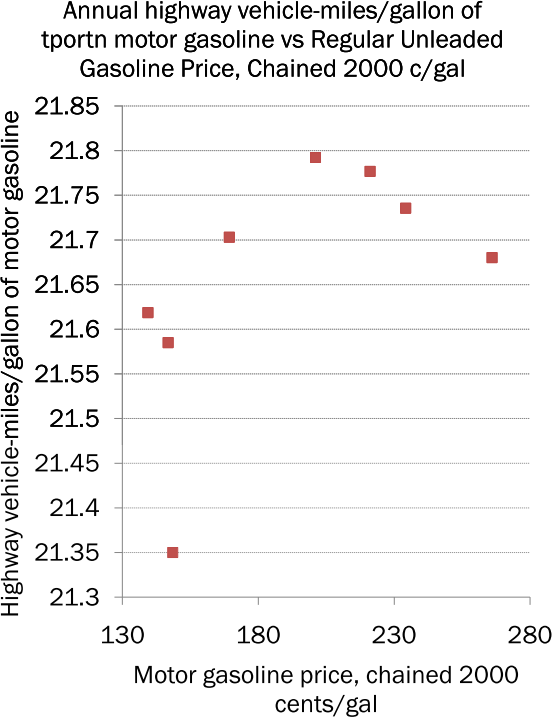
Annual highway-vehicle miles per gallon of motor gasoline vs. Chained motor gasoline price


With gas prices inching back up to 3 $/gal, the accepted idea is that people are driving less because of higher gas prices. Does this graph support the idea? (I used data from Federal Highway Administration and EIA to get the data).

Read More...

Apr 1, 2010

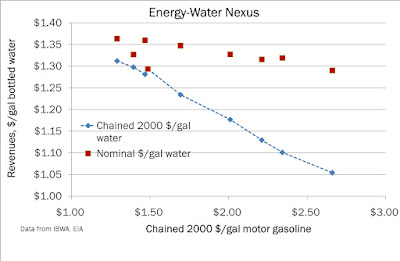
Bottled Water - Energy


Effect of increased oil prices on bottled water revenues


The motivation for this article comes from the "Oil-in-Big-Macs" work by Gregor. This is a graph that I put together taking data from International Bottled Water Association and the Energy Information Administration (EIA). I used the price of gasoline as a proxy for oil/energy prices. The revenues, both real and nominal are affected by higher energy prices. Watch out for more single-figure articles on natural gas, water and energy in general.

Read More...

Mar 13, 2010

Natural Gas Prices and Demand from EIA forecasts


From

Natural gas prices and demand from EIA Annual Energy Outlook 2009, 2010


This is a combination of data from the EIA Annual Energy Outlook 2009 and 2010. The price data for 2009 were given in 2007 $ and were scaled to account for inflation. The demand curve for 2009 shows an inflection at years past 2025, which is not reflected in the AEO 2010 data. The term "quad" refers to quadrillion (1015) BTU). Each quadrillion BTU of natural gas is equivalent to approximately 1000 billion standard cubic feet of gas.

Read More...

 
The Energy Webring