Posts
Posts


Workshop on Power Systems and Markets 2015
Penn State [1], a leading research university recently launched the Center for Sustainable Electric Power Systems (CSEPS). This is "an interdisciplinary research initiative with focus on renewable power systems and markets."
CSEPS, led by Profs Mort Webster and Uday Shanbagh recently conducted a two day workshop on Power systems and markets (Nov 19,20 - 2015). I signed up for the workshop and attended several sessions on both days and learnt a lot of new things about power markets and also connected several dots inside my head between economic development, pricing power, strategy and island/remote area electricity supply.
Key Takeaways from CSEP workshop at Penn State:
1) Illinois Institute of Technology has built a full scale technology demonstration microgrid that powers their campus, saves peak power and has a simple payback period of about ~5 years. The project cost was $12 M but the DOE grant reduced the direct costs for IIT.
Also, at UCSD, a 42 MW microgrid is operational and paving the way for the future.
At UCSD, the microgrid provides the ability to manage 42 megawatts of generating capacity, including a central cogeneration plant, an array of solar photovoltaic installations and a fuel cell that operates on natural gas reclaimed from a landfill site. (link)
2. Dr. Paul Sotkiewicz (PJM) argued that heat rate improvements have caused lower CO2/MMWh. If my notes are correct, the numbers quoted were a total CO2 emission reduction of 115 million tonnes.
Some other interesting info bytes:
Some other interesting info bytes:
- West Virginia has zero combined cycle power plants
- F.R.E.D. is Federal Reserve Economic Data - a wealth of economic data available to anyone.
In this post, I will review some of the notes I gathered from two of the plenary sessions and some thoughts regarding applications into specific markets. The format will be introduction to speaker and topic, specific points from lecture, Q&A and Summary thoughts.
Technology and Policy Impacts on Electricity Markets
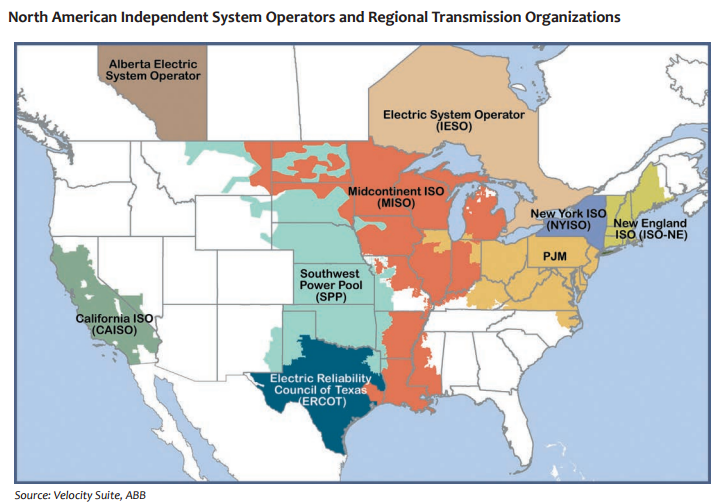
The opening plenary speaker was Dr. Paul Sotkiewicz, Senior Economic Policy Advisor at PJM Interconnection. He immediately won the attention of the audience (at least mine, for sure) with his dry wit and knowledge. He has worked at the Federal Energy Regulatory Commissions and the University of Minnesota, and University of Florida, prior to PJM, so we got a treat listening to a very experienced professional with insights from academic, public and private perspectives. Before I say more about his lecture, it is important to stress on the scale of operations at PJM (an entity that covers 13 states now, although PJM originally used to be Pennsylvania Jersey Maryland).
Peak - 165, 492 MW
Capacity - 183, 604 MW
2014 GWh - 837, 796
Population - 61 million
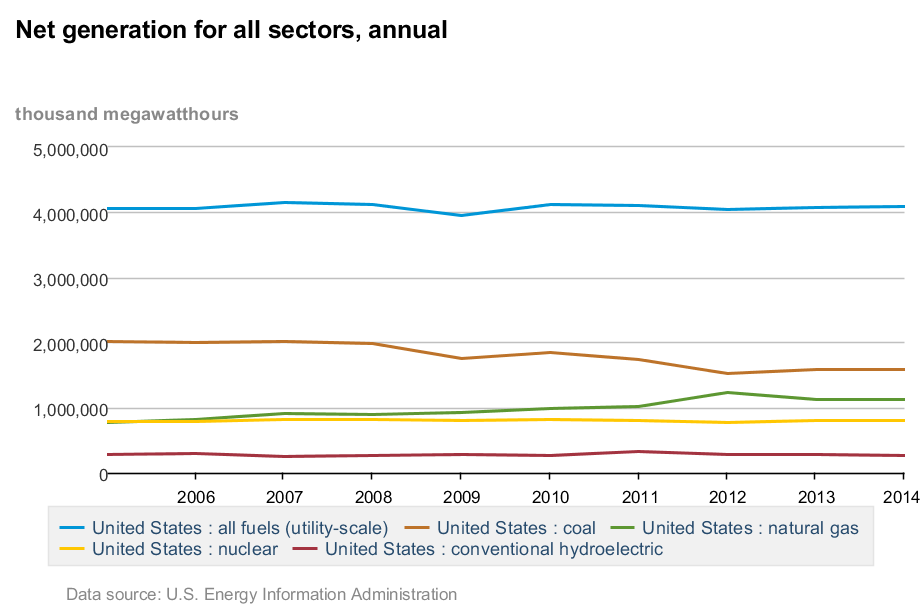
For comparison US total generation is nearly 4 million GWh:
http://www.eia.gov/electricity/monthly/epm_table_grapher.cfm?t=epmt_1_1
http://www.ferc.gov/market-oversight/mkt-electric/pjm/elec-pjm-glance.pdf
http://www.ferc.gov/market-oversight/mkt-electric/pjm/elec-pjm-glance.pdf
Q & A:
One of the questions raised was if the electricity data includes any of the distributed generation from small scale solar and other renewable electric. The speaker mentioned that this is some data that they do not always have access. Update: A recent EIA news report seems to indicate that this data may be available soon.
“Small-scale distributed solar photovoltaic (PV) systems, such as those found on residential and commercial rooftops, have grown significantly in the United States over the past several years. Starting this month, the U.S. Energy Information Administration (EIA) is including monthly estimates of small-scale distributed solar PV capacity and generation by state and sector in EIA's Electric Power Monthly.”
EIA estimates that total U.S. solar generation (PV and thermal) was 3.6 million megawatthours in September 2015, with 33% of that total coming from small-scale solar PV. Overall, U.S. solar generation, including both small-scale distributed PV and utility-scale PV and thermal solar generation, was equivalent to about 1.0% of total reported electricity generation from all utility-scale sources in September 2015.
EIA estimates that total U.S. solar generation (PV and thermal) was 3.6 million megawatthours in September 2015, with 33% of that total coming from small-scale solar PV. Overall, U.S. solar generation, including both small-scale distributed PV and utility-scale PV and thermal solar generation, was equivalent to about 1.0% of total reported electricity generation from all utility-scale sources in September 2015.
IIT MICROGRID - http://iitmicrogrid.net/
tags: natural gas, constrained, variable energy scheduling
Prof. Mohammed Shahidehpour
DC nanogrid running direct loads (computers and modified LEDs in gyms) help in cutting down costs of inverters/hardware. In effect they can reduce total loads by up to 56% and the test case showed that gymnasiums were able to reduce costs by about 50% (Presentation).
Cost of power on islands is typically about 50-55 cents/kWh. These costs can be brought down to about 30 cents/kWh by the use of microgrids.
[1]: The Pennsylvania State University, a large land-grant reseach institution in the Commonwealth of Pennsylvania, is located at State College PA and several other branch campuses through Pennsylvania and also has satellite locations in San Diego and collaborations with several institutions around the world. Note: I hold a Masters degree from Penn State Mechanical Engineering and am (/was) a PhD candidate in Energy and Mineral Engineering.
[2]: Funded by the Earth and Mineral Sciences Energy Institute, the Center for Sustainable Electric Power Systems (CSEPS) brings together university faculty from a variety of disciplines—including engineering, economics, earth sciences and agricultural sciences—to develop innovative research projects that are centered on sustainable electric power.
Other Relevant Data: